
Planning an event can be exciting, but managing everything from the initial idea to the final celebration requires proper organization. Whether you are planning a birthday party, wedding, anniversary, baby shower, corporate event, or another special occasion, having a clear plan can help you stay within budget and avoid last-minute problems.
If you are wondering how to plan an event, the process becomes much easier when you divide it into simple steps. This complete event planning guide explains everything from setting your goals and budget to choosing a venue, arranging decoration, coordinating vendors, and managing the event day.
1. Define Your Event Goals and Requirements
The first step in how to plan an event is to clearly define what you want to achieve. Start by deciding the type of event, its purpose, expected number of guests, preferred date, and overall experience you want to create.
For example, a wedding may require extensive decoration, catering, entertainment, and guest management, while a small birthday celebration may need only a venue, food, entertainment, and decoration.
Create a basic list of your requirements before contacting vendors. This gives you a clear direction and makes the entire event planning process easier to manage.
2. Set a Realistic Event Budget
Budget planning is one of the most important event planning tips for any successful celebration. Decide how much you are comfortable spending and divide the amount among different requirements.
Common event expenses include:
- Venue rental
- Decoration and flowers
- Catering and refreshments
- Photography and videography
- Entertainment and music
- Invitations
- Lighting and sound
- Transportation
- Staff and event coordination
- Emergency or contingency expenses
Always keep a small portion of your budget aside for unexpected costs. A realistic budget helps you compare vendors and make better decisions without unnecessary expenses.
3. Choose the Right Date and Venue
Once your budget and requirements are clear, select a suitable date and venue. The venue should be appropriate for the number of guests, type of event, theme, and available facilities.
When selecting a venue, consider its location, parking, accessibility, seating capacity, washrooms, electricity, lighting, and decoration restrictions.
For example, a banquet hall may be ideal for a wedding or large celebration, while a farmhouse or outdoor venue may work better for certain social events.
Booking the venue early is an important part of event management planning, particularly for weddings and events during busy seasons.
4. Select Your Theme and Event Decoration
The theme and decoration create the visual identity of your event. Choose a style and color combination that matches the occasion and atmosphere you want.
Depending on your event, you can consider balloon decoration, floral decoration, stage decoration, entrance decoration, backdrops, table arrangements, and decorative lighting.
For a birthday, you might choose a personalized balloon theme. For a wedding, elegant floral arrangements and a beautifully designed stage can create a more sophisticated atmosphere.
If you are unsure about decoration, working with a professional event decorator can help you select a theme that fits your venue, budget, and occasion.
5. Book and Coordinate the Right Vendors
An event often requires several vendors, so vendor coordination should be included in your event planning strategy.
Depending on your event, you may need:
- Event decorator
- Caterer
- Photographer
- Videographer
- DJ or live entertainment
- Makeup artist
- Invitation or printing service
- Sound and lighting team
- Transportation provider
Compare different vendors based on their experience, portfolio, pricing, reviews, availability, and services. Confirm important details such as the date, setup time, deliverables, payment terms, and cancellation policy.
Keeping all vendor information in one place can make your event coordination checklist much easier to manage.
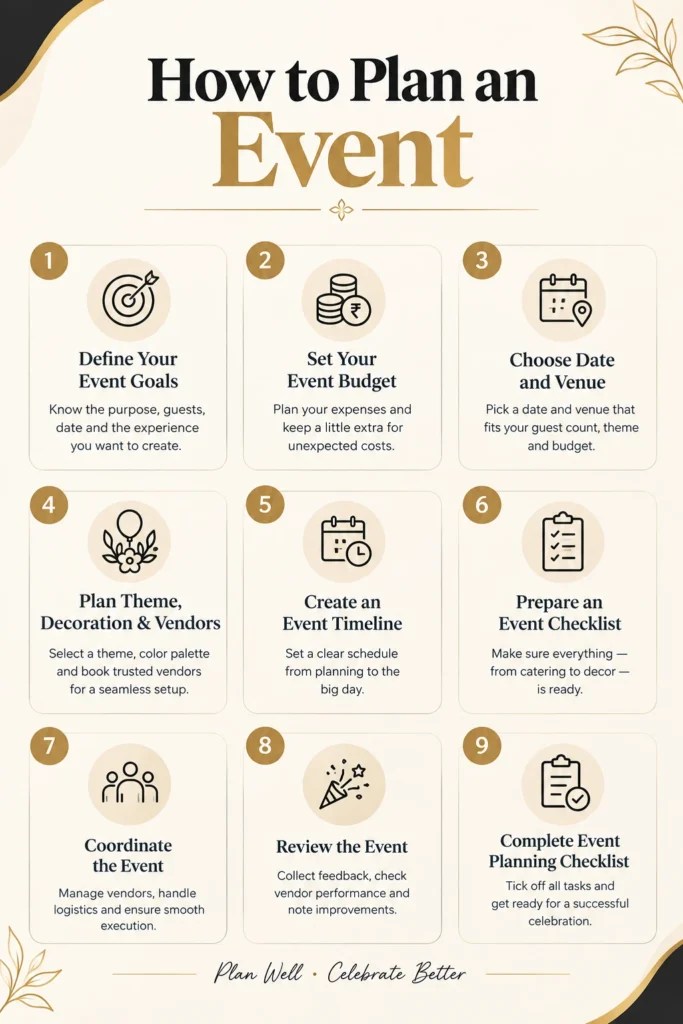
6. Create an Event Planning Timeline
A detailed event planning timeline helps you understand what needs to be completed and when.
4–8 Weeks Before the Event
- Finalize the event concept
- Set the budget
- Book the venue
- Select the theme
- Contact and book major vendors
2–4 Weeks Before
- Finalize the guest list
- Confirm decoration requirements
- Finalize catering
- Send invitations
- Confirm entertainment and photography
1 Week Before
- Reconfirm all vendors
- Finalize the event schedule
- Check venue arrangements
- Prepare important contact information
- Review your event preparation checklist
Event Day
- Check the venue before guests arrive
- Supervise decoration and setup
- Coordinate vendors
- Follow the event schedule
- Resolve unexpected issues
- Ensure guests have a smooth experience
This event planning timeline checklist can be adjusted according to the size and complexity of your event.
7. Prepare an Event Organization Checklist
Before the event begins, review an event organization checklist to make sure nothing important has been missed.
Your checklist should include:
☐ Venue confirmed
☐ Guest list finalized
☐ Decoration confirmed
☐ Catering confirmed
☐ Photography booked
☐ Entertainment arranged
☐ Seating organized
☐ Sound and lighting checked
☐ Vendor arrival times confirmed
☐ Event schedule prepared
☐ Emergency contacts available
A detailed event management checklist reduces confusion and allows you to identify potential problems before the event starts.
8. Coordinate the Event on the Big Day
Good event coordination is essential for successful event planning. On the event day, someone should be responsible for monitoring vendors, decoration, catering, entertainment, guest requirements, and the overall schedule.
If you are managing everything yourself, delegate responsibilities to trusted people whenever possible. Trying to handle every small task personally can make it difficult to enjoy your own event.
Professional event planners and decorators can also manage setup and coordination, allowing the host to focus on their guests and celebration.
9. Review the Event After It Ends
Event planning does not necessarily end when the guests leave. After the celebration, take some time to review what worked well and what could be improved.
Consider the quality of the decoration, vendor performance, guest feedback, budget, timing, and overall organization. These observations can help you make better decisions when planning your next event.
Complete Event Planning Checklist
For a quick overview, the steps to plan an event are:
- Define your event goals.
- Decide the number of guests.
- Set your event budget.
- Select the date.
- Book the venue.
- Choose the theme and decoration.
- Hire and coordinate vendors.
- Create an event planning timeline.
- Confirm all arrangements.
- Manage the event day.
- Review the event afterward.
Frequently Asked Questions About Event Planning
How do you plan an event from start to finish?
Start by defining the event’s purpose, guest count, date, and budget. Then choose a venue, select the theme, book vendors, create a timeline, prepare a checklist, and coordinate all arrangements on the event day.
What is the first step in planning an event?
The first step is to define your event goals and requirements. Knowing the type of event, number of guests, date, purpose, and desired experience gives you a clear foundation for the rest of your planning.
How far in advance should you plan an event?
The ideal planning time depends on the size and type of event. Small celebrations may require a few weeks, while weddings, corporate events, and large celebrations are generally easier to manage when planned several months in advance.
What should an event planning checklist include?
An event planning checklist should include the venue, budget, guest list, decoration, catering, entertainment, photography, vendors, timeline, seating, logistics, and event-day responsibilities.
How can you plan an event successfully?
To plan an event successfully, start early, create a realistic budget, choose reliable vendors, maintain a detailed timeline, prepare for unexpected situations, and coordinate all important arrangements before the event day.
Plan Your Event with Confidence
Learning how to plan an event becomes much easier when the process is organized into clear steps. From setting your budget and choosing a venue to planning decoration, coordinating vendors, and managing the event day, every detail contributes to the overall experience.
For celebrations in Delhi NCR, professional event planning and decoration support can make the process smoother while helping you create a memorable and visually beautiful occasion. With the right planning, reliable professionals, and a well-organized checklist, you can focus less on managing details and more on enjoying your special event.